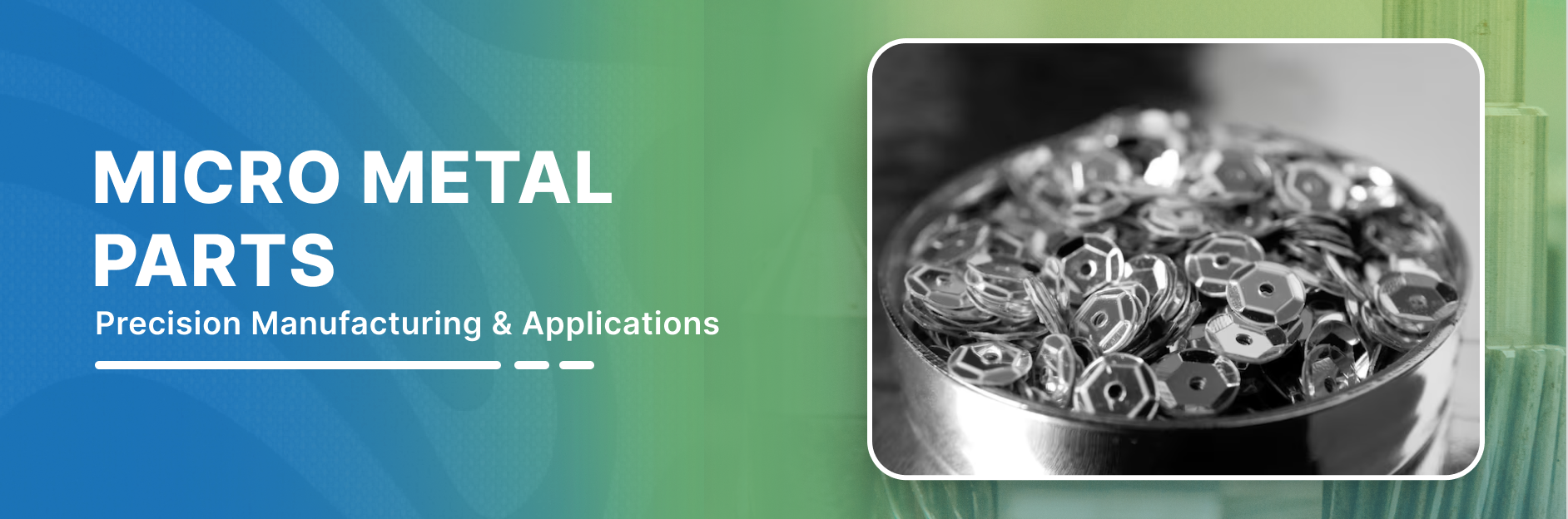
Most people never see them, but micro metal parts keep modern technology moving. They sit inside medical devices, electronics, and aerospace systems, doing critical work at a scale smaller than a fingernail.
According to Sharretts Plating, micro metal parts are typically components under 10 mm in size, often featuring tolerances and details well below 0.1 mm. At that scale, even minor variation can cause failure.
As products get smaller, lighter, and more complex, these parts have become essential, not optional. From precision sensors to miniature mechanical systems, micro metal parts demand manufacturing methods that balance accuracy, consistency, and cost.
This article breaks down what they are, how they’re made, and where they’re used.
In a Nutshell:
What Defines Micro Metal Parts: Components requiring micron-level tolerances and fine features, not just small dimensions.
How They’re Made: Specialized precision processes are needed to maintain accuracy and repeatability.
Where They’re Used: Critical applications across medical, electronics, aerospace, and industrial systems.
Why Execution Matters: Early manufacturing alignment prevents scale-up issues and unnecessary cost.
What Are Micro Metal Parts?
Micro metal parts are not just smaller versions of standard components. They represent a different level of manufacturing precision altogether. In industrial terms, micro metal parts are metal components typically under 10 mm in size, with features and tolerances measured in microns rather than millimeters.
According to Sharretts Plating, these parts often require extremely tight dimensional control because even the smallest deviation can affect performance or reliability.
What sets micro metal parts apart is not only their size, but the precision demanded at that scale.
Aspect | Micro Metal Parts | Standard Small Metal Parts |
Typical Size | Under 10 mm | Small, but often above 10 mm |
Tolerance Range | Micron-level tolerances | Looser, millimeter-level tolerances |
Feature Complexity | Extremely fine details and thin walls | Simpler features, thicker sections |
Manufacturing Risk | High sensitivity to variation | More forgiving in production |
Inspection Requirements | Optical and high-magnification methods | Conventional measurement tools |
Micro metal parts are produced from materials that can maintain strength and consistency at very small scales, including:
Steel
Stainless steel
Brass
Titanium
Takeaway: Micro metal parts aren’t defined by size alone. They’re defined by the level of precision, control, and manufacturing discipline required to produce them reliably.
Once micro metal parts are clearly defined, the next question becomes how such small components can be produced with that level of precision, consistency, and control.
How Precision Micro Metal Parts Are Manufactured
Producing micro metal parts isn’t simply a matter of scaling down traditional manufacturing. At this size, material behavior changes, tools become fragile, and tolerances tighten dramatically.
That’s why manufacturers rely on specialized processes designed specifically for precision at the micro scale.
Below are the most common methods used across industries, each suited to different part requirements, volumes, and geometries.

Micro CNC Machining & Micromachining
Micro CNC machining uses highly specialized equipment, tooling, and controls to create extremely small features with tight tolerances. This process relies on micro drills, miniature end mills, and precision spindles to machine complex geometries that would be impossible with standard CNC tools.
How the process works:
A solid metal blank is secured using high-precision fixturing
Micro tools (often under 1 mm in diameter) machine features in controlled passes
Tool paths are optimized to minimize deflection and heat buildup
Parts are inspected using optical or high-magnification systems
It’s commonly used when parts require:
Very tight dimensional control
Complex 3D geometries
Clean edges and defined features
Low to medium production volumes
Because tool deflection and wear are major concerns at this scale, micro machining demands careful process control and slower cutting speeds, as noted by Frigate and other micro-manufacturing specialists.
Micro Metal Injection Molding (Micro MIM)
Micro Metal Injection Molding, or Micro MIM, combines fine metal powders with binders to form extremely small, complex parts in high volumes. The molded parts are later debound and sintered to achieve final strength and density.
How the process works:
Fine metal powder is mixed with a binder to form feedstock
The feedstock is injection-molded into micro-scale cavities
Binder is removed through debinding
Parts are sintered to reach the final density and strength
This process is especially effective for:
Very small, intricate shapes
High-volume production runs
Parts with features that are difficult or costly to machine
Applications requiring consistency across thousands or millions of parts
Micro MIM is often chosen when geometry complexity is high and per-part cost needs to decrease at scale.
Photo Etching & Laser-Based Techniques
Photo etching and laser processing are non-contact methods used to create ultra-thin micro metal parts with precise, repeatable features. Instead of cutting with tools, these methods remove material using chemical or laser energy.
How the process works:
A photoresist or programmed laser defines the part geometry
Material is selectively removed without physical contact
Parts are cleaned and finished without mechanical stress
They are typically used for:
Flat or thin-profile components
Fine patterns, slots, or apertures
Parts where mechanical stress from tooling must be avoided
Applications requiring burr-free edges
These techniques excel where traditional machining would introduce distortion or damage at small scales.
No matter which manufacturing method is used, micro metal parts share a set of characteristics that make them uniquely challenging.
Critical Characteristics of Micro Metal Parts
What truly separates micro metal parts from larger components isn’t just size, it’s sensitivity. At the micro scale, tolerances tighten, margins disappear, and small variations can have outsized consequences. Features that would be insignificant on a larger part can determine whether a micro component functions correctly or fails outright.
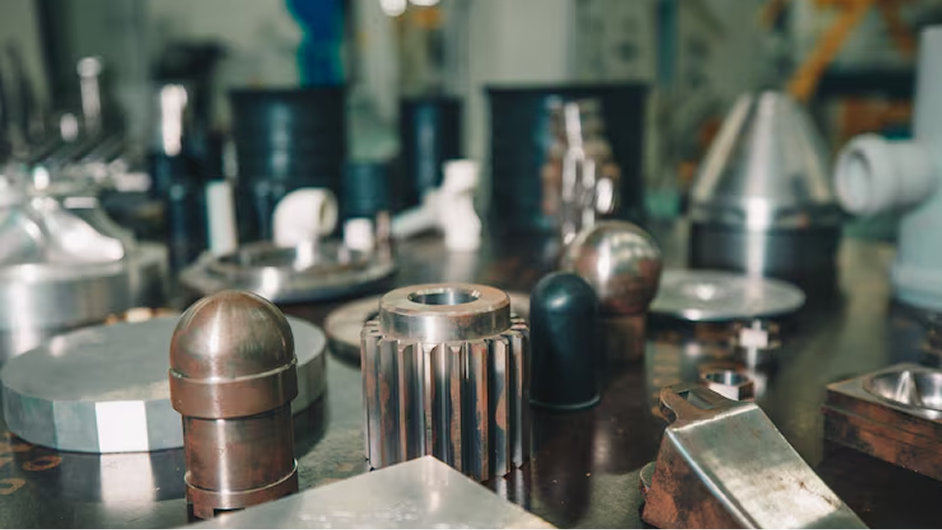
Key characteristics that define it include:
Micron-Level Tolerances: Dimensional accuracy is often measured in microns, leaving little room for variation or process drift.
High Feature Density: Multiple functional features are packed into extremely small footprints.
Tool and Process Sensitivity: Cutting forces, heat, and vibration have a much greater impact at small scales.
Material Behavior at Scale: Metals can respond differently when machined or formed into very small features.
Surface Finish Criticality: Roughness or burrs that are negligible on larger parts can impair function or assembly.
Inspection Complexity: Verification often requires optical measurement, microscopy, or specialized metrology equipment.
These characteristics aren’t theoretical; they directly shape where micro metal parts are used and why precision at this scale is non-negotiable.
Key Applications of Micro Metal Parts
Micro metal parts are rarely standalone components. They’re embedded deep inside systems where space is limited, and performance tolerance is unforgiving. As products continue to shrink while expectations rise, these parts enable functionality that larger components simply can’t deliver.
Their value shows up most clearly in applications where precision, reliability, and repeatability matter more than visibility.
Industry | How Micro Metal Parts Are Used |
Medical Devices | Drug-delivery mechanisms, microsurgical tools, iand mplantable component housings |
Electronics | Shielding components, micro connectors, EMI containment parts |
Aerospace | Miniature actuation components, precision fasteners, sensor housings |
Automotive | Fuel system micro components, transmission control parts, micro valve elements |
Hydraulics & Pneumatics | Flow control elements, miniature orifices, precision sealing components |
Industrial Sensors | Measurement housings, calibration components, micro mechanical interfaces |
Defense & Firearms | Trigger mechanisms, safety components, and precision locking features |
This table is a starting point, not a checklist. If your application depends on compact design, tight tolerances, or precise mechanical interaction, there’s a strong chance micro metal parts are already playing a role, or should be.
How Sterling Sintered Supports Micro Metal Parts Manufacturing
Micro metal parts are unforgiving. Small size leaves no room for process variation, inconsistent tooling, or fragmented manufacturing steps. When parts move from prototype to production, the challenge is no longer just precision; it’s repeatability at volume. That’s where Sterling Sintered fits naturally into the conversation.
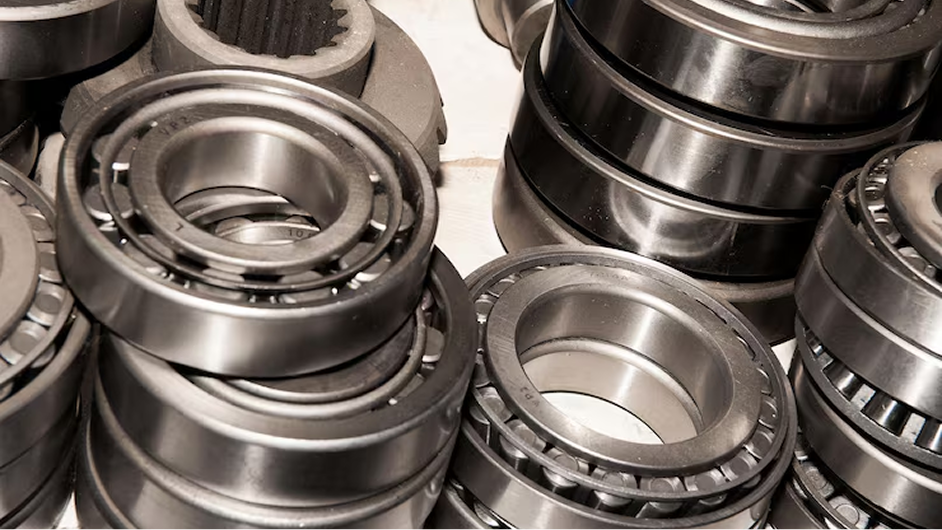
Sterling’s capabilities that directly support micro metal part production include:
Powder metal fabrication for small, precision ferrous components where dimensional consistency is critical
Support for miniature parts up to 500 grams with production volumes ranging from hundreds annually to high-volume weekly programs
In-house tooling design and fabrication to maintain tight control over micro-scale tolerances across production life
Secondary operations such as sizing, heat treatment, machining, finishing, and impregnation to deliver fully functional parts
Assembly and sub-assembly services that reduce handling risk for small, delicate components
Blueprint-based optimization to improve manufacturability for powder metallurgy without redesigning the part
Rather than treating micro metal parts as special one-off jobs, Sterling Sintered treats them as production systems: built for stability, scalability, and long-term performance.
Conclusion
Micro metal parts push manufacturing decisions into a narrow margin for error. At this scale, the difference between success and rework often comes down to how well a part is designed for production, not just for precision. Tolerances, material behavior, and process stability matter as much as geometry.
Sterling Sintered helps manufacturers bridge that gap. By focusing on repeatable powder metallurgy, in-house tooling, secondary operations, and assembly, they support micro metal parts that perform reliably beyond the prototype stage.
If your application relies on micro metal parts, contact Sterling Sintered to review your designs and production needs.
FAQs
1. At what point does a small metal part qualify as a micro metal part?
A part typically falls into the micro metal parts category when its features, tolerances, or functional details require micron-level control — not just when the overall size is small.
2. Why do micro metal parts often fail during scale-up, not prototyping?
Processes that work for prototypes don’t always hold up at volume. Micro metal parts are especially sensitive to tooling wear, process drift, and handling variation during full production.
3. Are micro metal parts always more expensive to manufacture?
Not necessarily. While precision adds cost, choosing the right process — such as powder metallurgy for volume — can significantly reduce per-part cost compared to machining alone.
4. What’s the biggest design mistake engineers make with micro metal parts?
Over-specifying tolerances or materials without considering manufacturability. At the micro scale, unnecessary requirements can quickly drive up cost and risk.
5. How early should manufacturing be involved in micro metal part projects?
As early as possible. Early manufacturing input helps ensure micro metal parts can be produced consistently, not just accurately, once production begins.