The automotive industry has entered a phase where complexity is the norm, not the exception. Electrification, tighter quality expectations, and sustainability pressures are reshaping how components are designed, produced, and validated.
In this environment, manufacturing excellence in automotive components goes far beyond lean operations or cost control. It demands tight process discipline, digital integration across the shop floor, and precision-driven execution at every stage of production.
This guide explores the core practices that enable automotive manufacturers to deliver consistent quality, operational resilience, and long-term competitiveness in an increasingly demanding market.
Key Takeaways
Leading manufacturers are moving from passive dashboards to "Agentic AI" that automatically reroutes logistics and schedules maintenance before a bottleneck occurs.
With regulations like the EU's "Battery Passport" and North America's Catena-X hub, traceability and material reuse are now core performance metrics.
The shift from global to "local-for-local" production has made nearshoring and early DFM (Design for Manufacturability) collaboration essential for supply chain stability.
Transitioning to Wide Bandgap (WBG) materials like SiC and GaN is significantly increasing EV range and charging efficiency, requiring new specialized assembly processes.
Defining Manufacturing Excellence in Automotive Components
In 2026, manufacturing excellence in automotive components is defined by the ability to deliver "first-time-right" quality while maintaining the agility to pivot between Internal Combustion Engine (ICE), Hybrid, and Battery Electric Vehicle (BEV) platforms.
It is a philosophy that blends the discipline of the IATF 16949 standard with the predictive power of the Industrial Metaverse.
Excellence is no longer a static goal but a dynamic state of "Flow." By identifying system constraints, whether they be a specific CNC bottleneck or a raw material shortage and synchronizing the entire supply chain around that constraint, manufacturers can achieve unprecedented levels of On-Time-In-Full (OTIF) delivery.
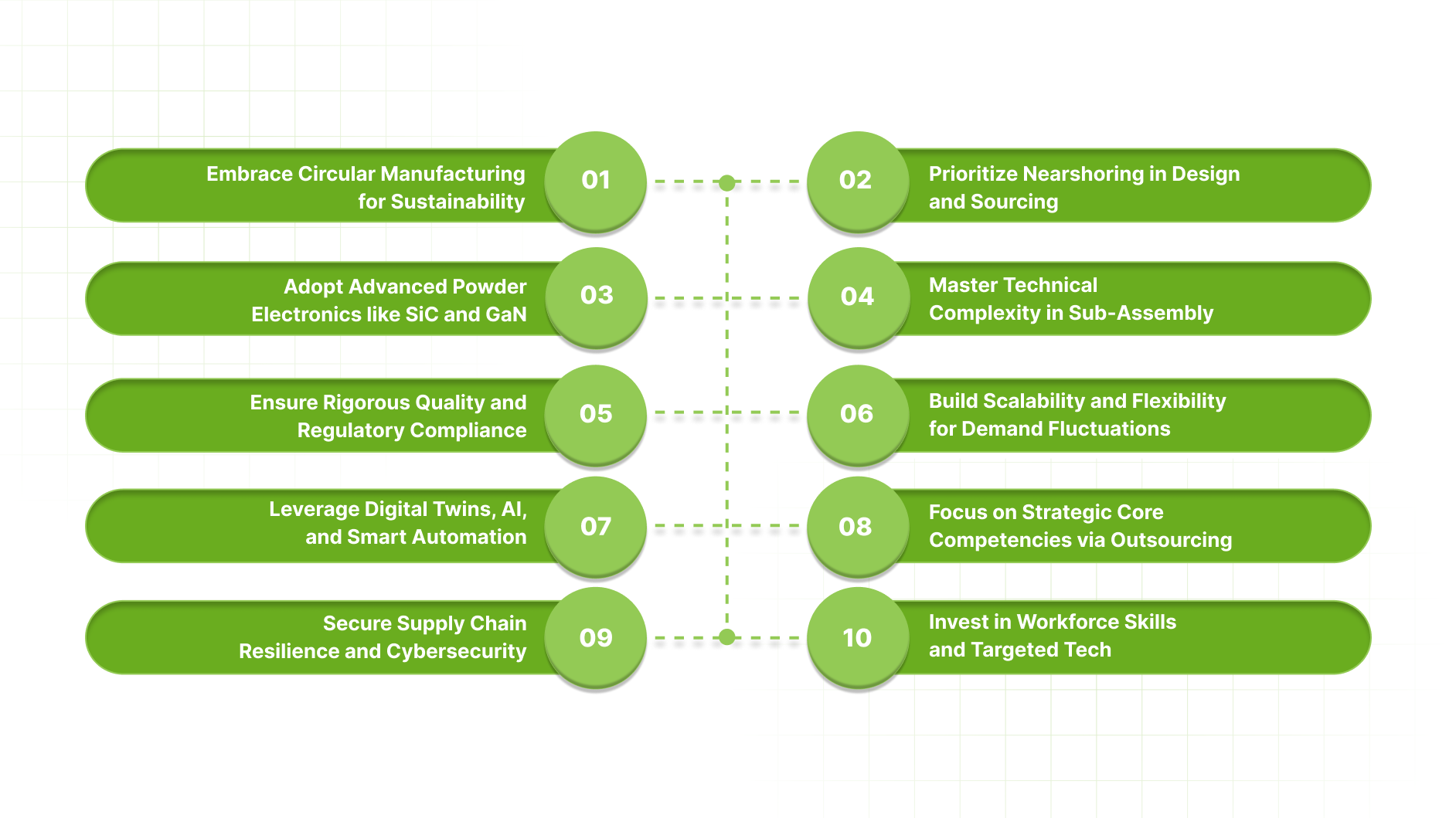
Excellence in Automotive Component Manufacturing Practices
Manufacturing excellence in automotive components requires the tight integration of precision engineering, real-time data, and material efficiency.
As vehicle systems become more complex and sustainability takes center stage, a total-system approach, aligning advanced processes like powder metallurgy with the digital thread, is essential to deliver consistent, high-performance components.
1. Embrace Circular Manufacturing for Sustainability and Cost Control
The transition from a linear "take-make-dispose" model to a circular ownership model is no longer optional. In 2026, manufacturing excellence in automotive components is defined by a company’s ability to close material loops and reduce Scope 3 emissions.
Key Objective: Shift from linear production to circular ownership and material reuse.
Innovative Strategy: Rethink material selection at the design phase to favor metals and alloys that are easily recycled without losing structural integrity.
Compliance & Efficiency: By reducing reliance on virgin raw materials, manufacturers can mitigate the price volatility of the global commodities market and meet stringent ESG (Environmental, Social, and Governance) targets.
One of the most effective ways to achieve this is through the use of iron and steel powders, which allow for a nearly zero-waste production cycle compared to traditional subtractive machining.
2. Prioritize Nearshoring in Design and Sourcing
In a post-2025 landscape, supply chain resilience is anchored in proximity. Manufacturing excellence now involves integrating North American production hubs directly into the initial design phase to minimize logistical risks and lead times.
Key Objective: Integrate localized production capabilities from the earliest R&D stages.
Innovative Strategy: Adopt early Design for Manufacturability (DFM) collaboration. By working with domestic experts in secondary operations, OEMs can ensure that parts are optimized for local machinery and material availability.
Compliance & Efficiency: Nearshoring significantly reduces the carbon footprint associated with trans-continental shipping and ensures compliance with regional trade agreements like the USMCA.
3. Adopt Advanced Powder Electronics like SiC and GaN
The heart of the 2026 vehicle is electric, and the move from silicon to Wide Bandgap (WBG) materials is the new standard for efficiency.
Key Objective: Transition power electronics from standard silicon to Silicon Carbide (SiC) and Gallium Nitride (GaN).
Innovative Strategy: Secure long-term domestic supply deals for these critical chips and build local capacity for specialized sub-assembly.
Compliance & Efficiency: These materials drastically enhance EV range and charging speed by reducing thermal energy loss. The thermal efficiency (η) of these modules can be expressed as:

4. Master Technical Complexity in Sub-Assembly
As vehicles become more modular, manufacturing excellence in automotive components is increasingly found in the assembly of complex sub-systems rather than individual parts.
Key Objective: Manage custom configurations and specialized assembly processes through a single-source partner.
Innovative Strategy: Partner with specialists for testing and pre-assembly solutions. For instance, integrating self-lubricating bearings and bushings directly into a steering column sub-assembly ensures a more reliable final product.
Compliance & Efficiency: Outsourcing technical complexity allows OEMs to meet regulatory safety demands more accurately while reducing the number of individual SKUs they must manage.
5. Ensure Rigorous Quality and Regulatory Compliance
In 2026, quality is managed through "Traceability 4.0," where every component has a unique digital identity linked to its material batch and production timestamp.
Key Objective: Maintain end-to-end oversight and full traceability of every manufactured part.
Innovative Strategy: Implement AI-driven vision inspection systems that perform real-time audits during the sintering and finishing processes.
Compliance & Efficiency: Achieving consistent OEM standards builds regulatory trust and reduces the risk of costly recalls in highly regulated global markets.
6. Build Scalability and Flexibility for Demand Fluctuations
Market volatility requires a production floor that can "breathe." Excellence means designing operations that can scale up for a hot new EV launch or pivot when demand shifts.
Key Objective: Design operations for scalable demand adaptability.
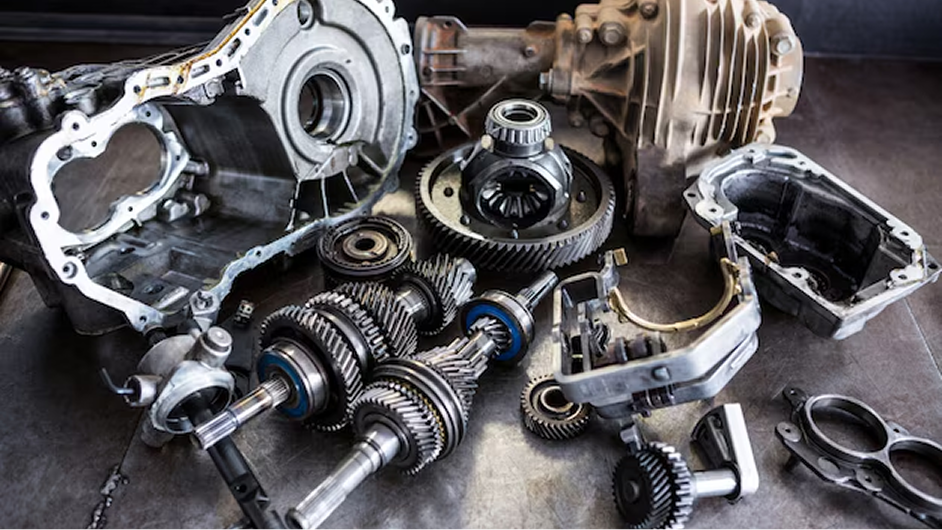
Innovative Strategy: Develop robust inventory systems and a production flow that utilizes modular work cells. This allows for the production of varied gears and sprockets without needing a total line overhaul.
Compliance & Efficiency: Scalability prevents efficiency loss during volume changes and protects the bottom line during economic shifts.
7. Leverage Digital Twins, AI, and Smart Automation
The most advanced factories in 2026 are "software-defined." By using a virtual replica of the plant, engineers can optimize every movement before a single part is made.
Key Objective: Optimize factory layout and reduce material waste through digital replicas (Digital Twins).
Innovative Strategy: Use smart sensors and AI to monitor energy and material consumption in real time.
Compliance & Efficiency: Digital twins allow for "virtual commissioning," which can reduce physical ramp-up times for new automotive components by up to 50%.
8. Focus on Strategic Core Competencies via Outsourcing
Excellence is also knowing when to let an expert take the lead. By outsourcing non-core components, OEMs can focus on software and vehicle integration.
Key Objective: Designate non-core sub-assemblies to specialized experts who have mastered specific processes like powder metallurgy.
Innovative Strategy: Implement short-term optimization cycles where suppliers are invited to improve part designs for weight reduction.
Compliance & Efficiency: Streamlines logistics and reduces the internal workload for the OEM’s engineering teams.
9. Secure Supply Chain Resilience and Cybersecurity
As manufacturing becomes more connected, the threat of cyber-attacks on industrial control systems has become a top priority for manufacturing excellence in automotive components.
Key Objective: Enhance logistics efficiency while implementing robust cybersecurity protocols.
Innovative Strategy: Standardize communication platforms across the supply chain using secure, encrypted data protocols to protect proprietary part designs.
Compliance & Efficiency: Protects operational integrity and maintains the trust of OEM partners who are wary of IP theft.
10. Invest in Workforce Skills and Targeted Tech
No amount of AI can replace the value of a skilled technician who understands the nuances of metal behavior during sintering.
Key Objective: Develop a high-skilled workforce that works in tandem with AI and automation.
Innovative Strategy: Focus on continuous upskilling, teaching workers how to interpret data from digital twins and manage robotic work cells.
Compliance & Efficiency: A skilled workforce is the final safeguard for quality and the primary driver of sustainable growth in a competitive economic landscape.
Conclusion
In 2026, manufacturing excellence in automotive components is a multifaceted discipline. It requires the technical mastery of new materials like Silicon Carbide, the digital savvy to manage an AI-driven supply chain, and the environmental commitment to lead a circular economy.
The manufacturers that thrive in this era are those that view complexity not as a burden, but as an opportunity to innovate. By blending advanced production techniques like high-precision sintering with the predictive power of the Industrial Metaverse, we are building a more resilient, sustainable, and high-performing automotive future.
At Sterling Sintered Technologies, we are at the forefront of this manufacturing evolution. From our material-efficient gears and sprockets to our specialized bearings and bushings, we provide the precision-engineered solutions that drive automotive excellence.
Contact us today to see how our expertise can accelerate your 2026 production goals.
FAQs: Automotive Manufacturing Excellence
1. How does manufacturing excellence in automotive components affect EV range?
Efficiency isn't just about the battery; it's about the manufacturing of the components. By using SiC/GaN semiconductors and high-precision, low-friction sintered parts, power loss is minimized. Lower power loss = higher efficiency = longer range.
2. Why is powder metallurgy considered a key to "manufacturing excellence"?
Because it is a "near-net-shape" process. It allows for the production of complex parts with virtually no waste, which is essential for meeting the sustainability and material efficiency goals of 2026.
3. How does a Digital Twin help in reducing production costs?
A Digital Twin allows you to "fail" in a virtual environment where it costs nothing. By simulating assembly line changes or new part designs virtually, you avoid the massive costs of physical downtime, scrapped tooling, and trial-and-error on the shop floor.
4. Is nearshoring always more expensive than overseas production?
Not when you calculate the Total Cost of Ownership (TCO). While hourly labor may be higher in North America, the savings in freight, reduced inventory-in-transit, faster time-to-market, and protection from tariffs often make nearshoring the more profitable choice in the long run.