The United States auto parts manufacturing market is poised to grow from USD 647.15 billion in 2024 to USD 754.5 billion by 2033, increasing pressure on OEMs to control cost-per-part and supply risk. As volumes rise, many OEM teams see scrap rates increase, machining hours expand, and supplier variability surface at the worst possible time.
If you are responsible for sourcing or manufacturing decisions, these pressures are familiar. Tight tolerances, audit exposure, tooling ownership, and repeatability across long programs often matter more than headline pricing during supplier selection.
In this blog, we’ll explore how OEMs evaluate automotive parts manufacturers, review major suppliers operating in the USA, examine process fit by component type, and clarify where powder metallurgy fits when machining costs escalate at scale.
Key Takeaways:
OEM sourcing decisions depend on process fit and repeatability, not supplier size or quoted pricing alone.
Machining-heavy processes often increase scrap and cycle time variability as production volumes rise.
Powder metallurgy supports stable geometry and material control for small-to-medium parts at sustained volume.
Tooling-driven manufacturing improves consistency across multi-year automotive programs.
Single-source secondary operations reduce coordination risk in high-volume OEM supply chains.
Top 10 Automotive Parts Manufacturers in the USA
The U.S. automotive supply base includes suppliers ranging from electronics specialists to structural component manufacturers. Each company supports different parts of the vehicle bill of materials, based on process focus and production scale.
Below is a practical overview of ten automotive parts manufacturers operating in the USA and where they typically fit within OEM sourcing strategies:
Sterling Sintered Technologies is a U.S.-based manufacturer focused exclusively on powder metallurgy for mid-to-high volume automotive programs. Its narrow process focus supports dimensionally stable parts with controlled material usage across long production runs. The company works with iron, bronze, stainless steel (300 and 400 series), and brass components.
Manufacturing focus: Net-shape and near-net shape powder metal fabrication with integrated secondary operations.
Typical components: Gears, bushings, structural PM parts, oil-impregnated components, sub-assemblies.
Best-fit OEM use cases: Programs where dimensional consistency and cost control become critical as volumes scale.
Cummins Inc.
Cummins is a U.S.-headquartered manufacturer known for engines and power systems supporting commercial and passenger vehicles. Its domestic operations cover diesel, natural gas, and electrified propulsion platforms. Cummins remains closely tied to heavy-duty and vocational automotive segments.
Manufacturing focus: Diesel and natural gas engines, electrified propulsion systems.
Typical components: Engine blocks, fuel systems, electrified drivetrains.
Best-fit OEM use cases: Heavy-duty vehicles requiring proven propulsion systems designed for sustained operation.
Robert Bosch LLC
Bosch’s U.S. operations supply automotive electronics and control systems across multiple vehicle segments. The company supports OEMs through large-scale manufacturing focused on safety and powertrain management. Its components often serve as core electronic building blocks.
Manufacturing focus: Electronics, sensors, braking systems, fuel systems.
Typical components: ABS modules, sensors, and engine management systems.
Best-fit OEM use cases: Vehicles with electronics-heavy architectures requiring established supply infrastructure.
Magna International
Magna International operates extensive U.S. manufacturing facilities supplying mechanical systems and modules. Its scope spans body, chassis, and drivetrain components produced at scale. Magna supports multi-platform vehicle programs with shared component needs.
Manufacturing focus: Metal forming, casting, body systems, and complete modules.
Typical components: Structural body parts, seating structures, drivetrain modules.
Best-fit OEM use cases: Programs requiring integrated mechanical systems across several vehicle lines.
Lear Corporation
Lear Corporation is a U.S.-based supplier centered on automotive interiors and electrical distribution. The company supports OEMs through high-volume production of seating systems and connectivity infrastructure. Lear often delivers complete interior subsystems rather than individual parts.
Manufacturing focus: Seating systems, wiring architectures.
Typical components: Seat frames, wiring assemblies, and connection systems.
Best-fit OEM use cases: Interior-focused programs requiring coordinated subsystem sourcing.
Aptiv
Aptiv supports U.S. automotive manufacturing through electrical and electronic vehicle architecture. Its operations focus on connectivity and power distribution components used across modern vehicles. Aptiv serves OEMs with increasing electronic content requirements.
Manufacturing focus: High-voltage systems, connectors, electronic modules.
Typical components: Wiring harnesses, control units, and connectors.
Best-fit OEM use cases: Vehicles with advanced electrical system architectures.
Dana Incorporated
Dana Incorporated is a U.S.-based manufacturer specializing in drivetrain and motion systems. Its products are designed for sustained mechanical loads across automotive applications. Dana supports both passenger and commercial vehicle programs.
Manufacturing focus: Axles, driveshafts, transmission components.
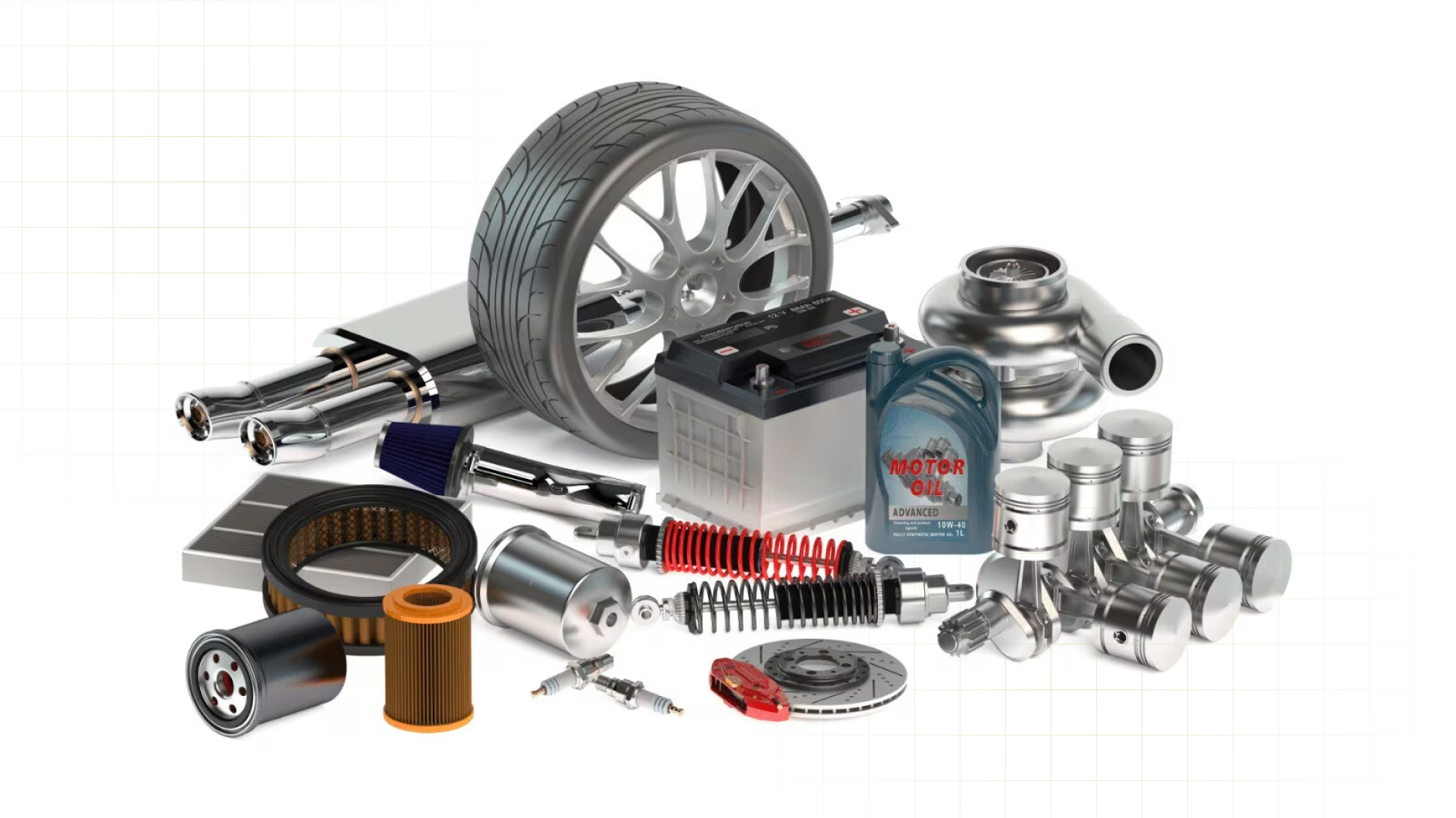
Typical components: Gears, shafts, drivetrain assemblies.
Best-fit OEM use cases: Powertrain applications requiring long-term mechanical durability.
BorgWarner
Overview: BorgWarner maintains U.S. manufacturing operations centered on propulsion technologies. The company supports both conventional and electrified vehicle platforms. Its components address emissions, performance, and electrification requirements.
Manufacturing focus: Turbochargers, transmission systems, electrified propulsion.
Typical components: Turbo assemblies, clutch systems, e-drive modules.
Best-fit OEM use cases: Programs combining mechanical propulsion with electrified elements.
ZF North America
ZF North America supplies chassis, transmission, and safety systems through U.S. manufacturing operations. Its components often integrate into broader motion control systems. ZF supports OEMs seeking coordinated chassis-level solutions.
Manufacturing focus: Chassis systems, transmissions, safety technologies.
Typical components: Steering systems, braking modules, transmissions.
Best-fit OEM use cases: Integrated chassis and motion control programs.
Gentex Corporation
Gentex Corporation is a U.S.-based supplier focused on vision and sensing products. The company supports automotive safety and visibility systems through electronics and optical manufacturing. Gentex concentrates on driver-facing electronic components.
Manufacturing focus: Electronics assembly, optical systems.
Typical components: Automotive mirrors, camera-based sensing units.
Best-fit OEM use cases: Vehicle programs emphasizing visibility and sensing technologies.
With supplier options outlined, attention shifts to the criteria you should apply when comparing automotive parts manufacturers during sourcing decisions.
How Automotive OEMs Should Evaluate Parts Manufacturers
Selecting an automotive parts manufacturer requires more than confirming installed capacity or comparing quoted piece prices. OEM sourcing teams must assess whether a supplier’s core manufacturing process, material discipline, and operating window support stable output over the full life of a vehicle program.
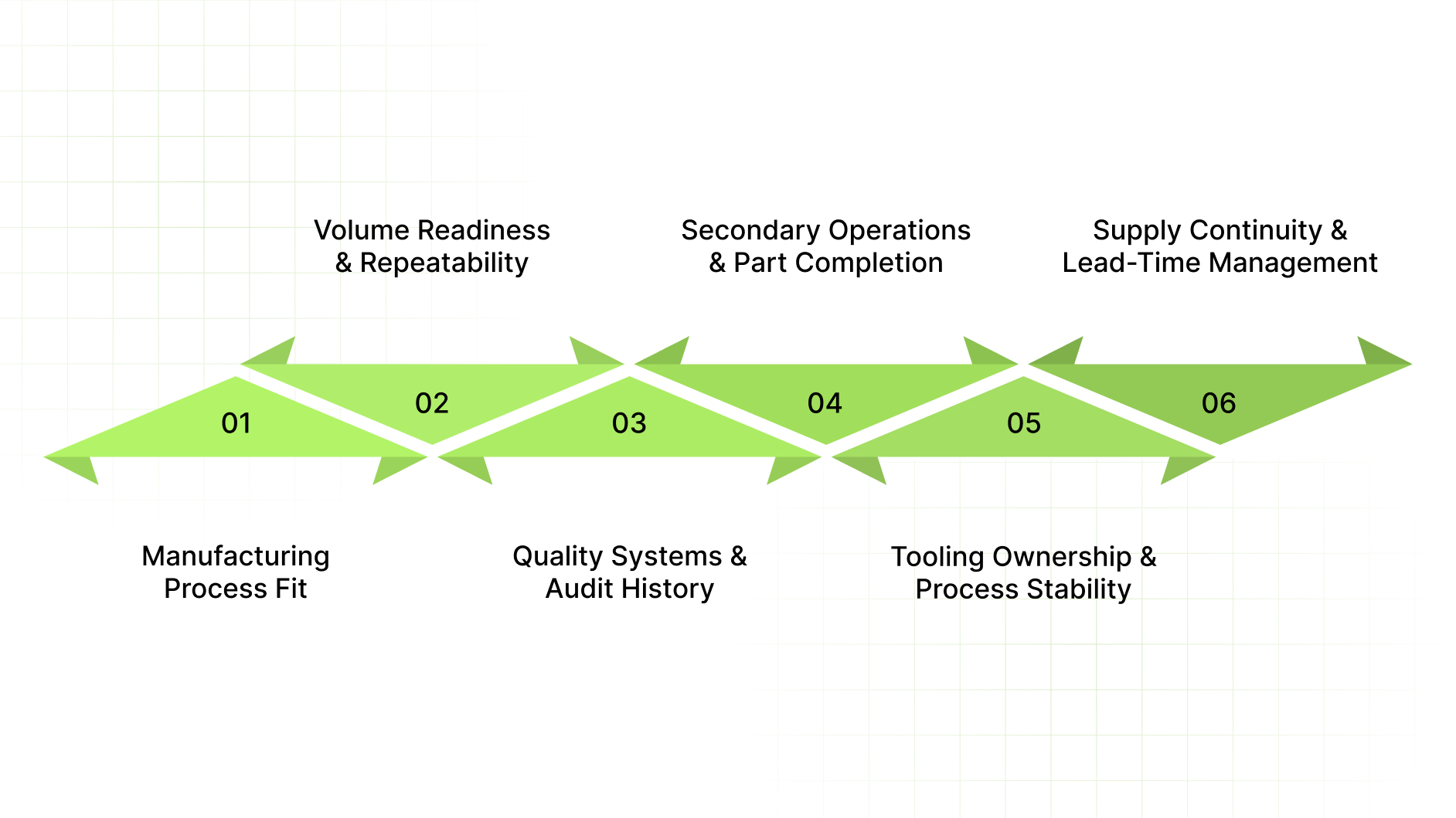
To evaluate suppliers consistently, OEMs typically assess the following criteria:
Manufacturing Process Fit:
Confirm whether the supplier’s core process matches part geometry, material, and tolerance requirements at sustained volume. CNC machining often introduces higher scrap, longer cycle times, and tool wear variability as complexity and throughput increase. Net-shape processes, such as powder metallurgy, form geometry earlier, reducing downstream correction.
Volume Readiness and Repeatability Control:
Suppliers must demonstrate stable dimensional output across extended production runs, not just PPAP samples. Machining-dependent processes frequently rely on continuous tool compensation as volumes increase, while tooling-driven processes like PM compaction lock geometry at the press level, supporting repeatability across multi-year programs.
Quality Systems and Audit History:
Certifications such as IATF 16949 and ISO 9001 indicate structured quality controls, documented process discipline, and readiness for recurring OEM audits. Suppliers should demonstrate how process controls maintain dimensional stability as production scales.
Secondary Operations and Part Completion Scope:
Manufacturers offering in-house sizing, heat treatment, steam oxidizing, copper infiltration, machining, and sub-assembly reduce coordination risk compared with fragmented, multi-vendor supply chains—particularly for high-volume programs with tight delivery windows.
Tooling Ownership and Process Stability:
OEMs benefit when suppliers control tooling design, maintenance, and storage. Tooling-driven processes, including PM compaction, support repeat program stability and reduce variability compared with setups that depend heavily on ongoing machining adjustments.
Supply Continuity and Lead-Time Management:
Reliable suppliers demonstrate predictable scheduling, inventory planning, and capacity visibility. Processes that minimize secondary operations and rework inherently reduce lead-time volatility and production disruption risk.
These evaluation criteria frequently reveal process limitations that prompt OEMs to consider powder metallurgy for specific high-volume component categories.
Why OEMs Use Specialized PM Manufacturers Like Sterling Sintered
When complex automotive parts are machined from solid iron or stainless steel, scrap rates often climb while cycle times stretch as volumes increase. Powder metallurgy addresses this friction by forming parts close to final geometry during compaction, reducing material loss and stabilizing output across long production runs.
To clarify why OEMs select focused PM partners for specific component categories, the following factors typically drive those sourcing decisions:
Press Capacity and Geometry Capability: High-tonnage presses, including 110-ton capacity and multi-level compacting, support complex geometries that would otherwise require multiple machining operations.
Defined Volume Operating Window: Powder metallurgy performs best for repeat programs ranging from approximately 500 parts per year up to 500,000 parts per week, where tooling investment supports long-term stability.
Controlled Part Size Parameters: PM manufacturing is best suited for small-to-medium precision components, not exceeding 500 grams per part, where density and geometry control remain predictable.
Density Control and Mechanical Performance: Compaction pressure and sintering cycles determine part density, which directly influences tensile strength, wear resistance, and dimensional consistency.
Design for Manufacturability Boundaries: PM manufacturers do not originate part designs from concept sketches but work with finalized designs to make them powder metal compatible.
Part Optimization and PM-Specific Refinements: Manufacturability consultation focuses on geometry adjustments, tolerance zoning, and feature refinement to reduce secondary processing and control cost-per-part.
Single-Source Secondary Processing: Access to sizing, heat treatment, steam oxidizing, copper infiltration, machining, and sub-assembly reduces supplier handoffs and scheduling exposure.
Repeat Program Stability: Tooling-driven geometry control supports consistent output across repeat automotive programs spanning multiple years.
This combination of defined boundaries, press capability, and volume discipline explains why powder metallurgy remains a practical manufacturing method for automotive components when machining economics begin to degrade at scale.
Conclusion
Automotive sourcing decisions improve when component requirements align with manufacturing processes rather than supplier size alone. Matching geometry, material choice, and volume to the right process reduces scrap exposure and long-term cost risk.
If your team is evaluating powder metallurgy for high-volume automotive components or reassessing machining-heavy designs as volumes grow, contact us to discuss technical fit, production scope, and manufacturing feasibility.
FAQs
When should OEMs involve a powder metallurgy supplier in the sourcing process?
OEMs should involve a powder metallurgy supplier during the design-definition stage, before geometry is finalized, to review tolerance feasibility, density targets, and cost drivers tied to tooling.
How does tooling amortization affect long-term part pricing?
Tooling costs are incurred upfront and spread across planned program volume, which helps stabilize per-part pricing once production reaches consistent operating levels.
What differs in PPAP requirements for powder metal parts compared to machined parts?
Powder metal PPAPs focus on press tooling validation, density consistency, and sintering control, while machined parts rely more on ongoing tool wear management.
Why is switching suppliers mid-program considered high risk?
Mid-program supplier changes introduce risk because tooling, process parameters, and material behavior are rarely transferable without production disruption or quality impact.
How do OEMs compare sustainability across manufacturing processes?
OEMs typically review material yield, scrap generation, energy consumption, and reliance on secondary operations when assessing environmental impact between processes.