The aerospace industry pushes materials to their absolute limits, demanding components that can endure extreme heat, pressure, and mechanical stress without failure.
To meet these demands, engineers increasingly rely on the applications of powder metallurgy in aerospace manufacturing. Powder metallurgy enables the production of high-performance alloys and near-net-shape components that are difficult or impossible to achieve through traditional methods.
From turbine discs to structural brackets, PM delivers lighter, stronger, and more reliable parts, making it a cornerstone technology for modern aircraft and space systems.
Key Takeaways
PM allows for precise control over grain structure and alloy composition, eliminating the segregation issues common in large-scale castings.
Utilizing advanced titanium and aluminum-lithium powders can reduce component weight by up to 30-50%, directly improving fuel efficiency and range.
The use of PM for nickel-based superalloys enables turbine components to operate at temperatures exceeding 1,500°C (2,732°F).
With material utilization rates near 95-98%, powder metallurgy drastically reduces scrap waste compared to traditional machining.
Processes like Metal Injection Molding (MIM) and Hot Isostatic Pressing (HIP) allow for complex internal geometries that are difficult to forge.
Material Advantages: The Science Behind Aerospace PM
The extreme environments of aerospace, ranging from cryogenic fuel tanks to the white-hot core of a jet engine, require materials that don't just survive, but thrive under pressure.
The unique advantage of the applications of powder metallurgy in aerospace lies in the ability to design materials at the molecular level.
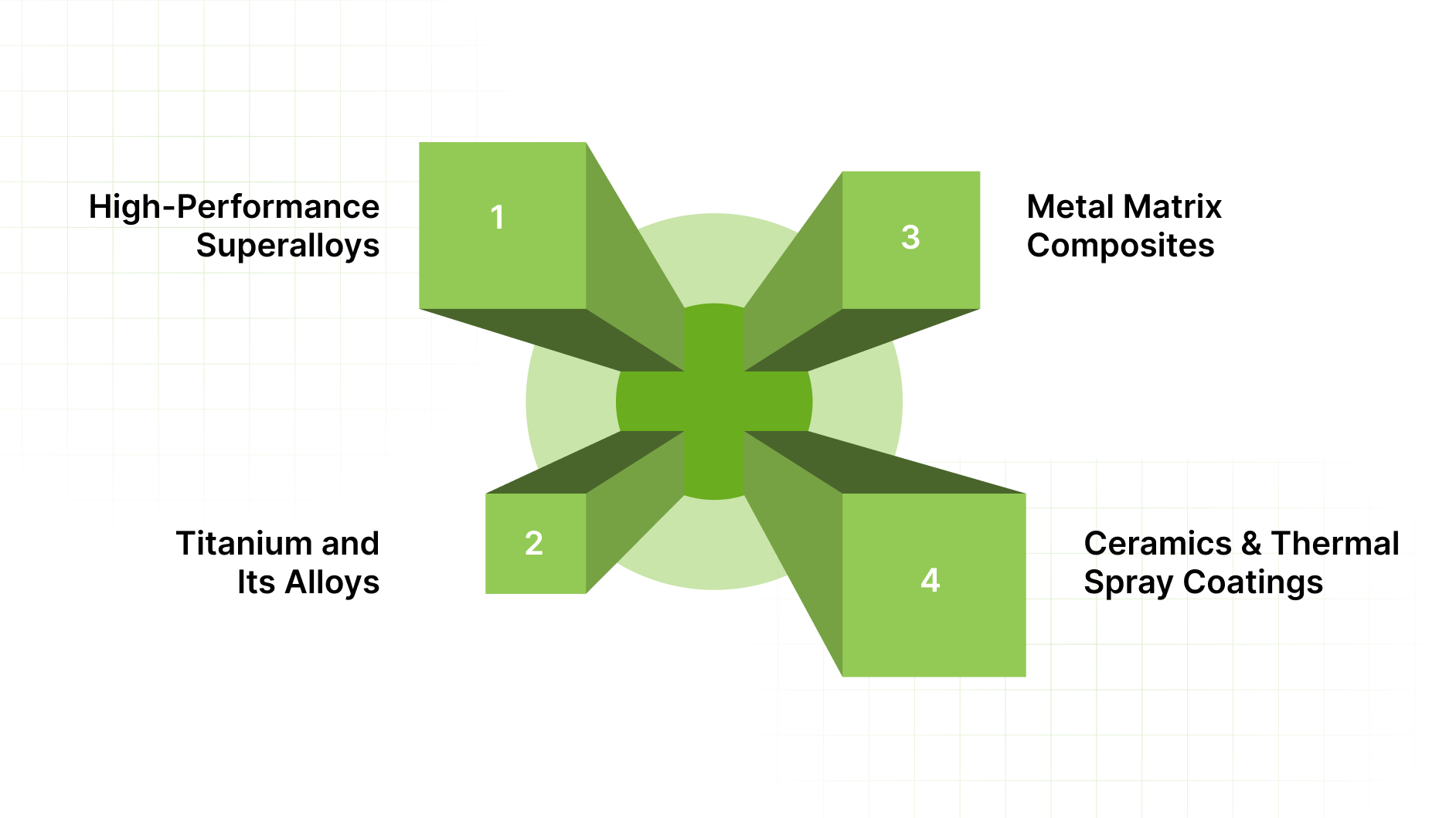
1. High-Performance Superalloys
For the hottest sections of a turbine engine, nickel-based and cobalt-based superalloys are indispensable. These materials must maintain high tensile strength and creep resistance (the ability to resist permanent deformation over time) at extreme temperatures.
In traditional casting, these alloys often suffer from "macro-segregation," where different elements settle in different parts of the mold, creating weak spots.
In contrast, PM atomization creates fine, uniform powders where every particle has the exact same chemical composition. When these powders are consolidated often through Hot Isostatic Pressing (HIP), the resulting part has a perfectly uniform microstructure, ensuring predictable performance in critical engine stages.
2. Titanium and Its Alloys
Titanium is the "darling" of aerospace due to its incredible strength-to-weight ratio and natural resistance to corrosion. However, titanium is notoriously difficult to machine.
The applications of powder metallurgy in aerospace solve this by using "Blended Elemental" or "Pre-alloyed" powders to create near-net-shape components.
Ti-6Al-4V: The workhorse alloy used in wing ribs, fuselage frames, and engine compressors.
Titanium Aluminide (TiAl): A revolutionary material that is 50% lighter than traditional nickel superalloys but can handle similar temperatures, making it ideal for low-pressure turbine blades.
3. Metal Matrix Composites (MMC)
MMCs are a "best of both worlds" solution, combining a metal matrix (like aluminum or titanium) with ceramic reinforcements (like silicon carbide). These materials offer specific stiffness and thermal stability that monolithic metals cannot reach.
They are increasingly used in structural components that require high rigidity with minimal thermal expansion, such as satellite housings and optical frames.
4. Ceramics and Thermal Spray Coatings
While not "metal" in the traditional sense, ceramic powders are a cornerstone of PM technology in aerospace. They serve as Thermal Barrier Coatings (TBCs), sprayed onto the surface of metal turbine blades to provide a protective "shield" against the searing heat of combustion gases.
While material science provides the foundation, it is the specific component applications that demonstrate the true power of this technology.
Significant Aerospace Component Applications
The reach of powder metallurgy extends from the nose cone to the exhaust nozzle. By examining specific applications of powder metallurgy in aerospace, we can see how different PM processes are matched to specific mechanical needs.
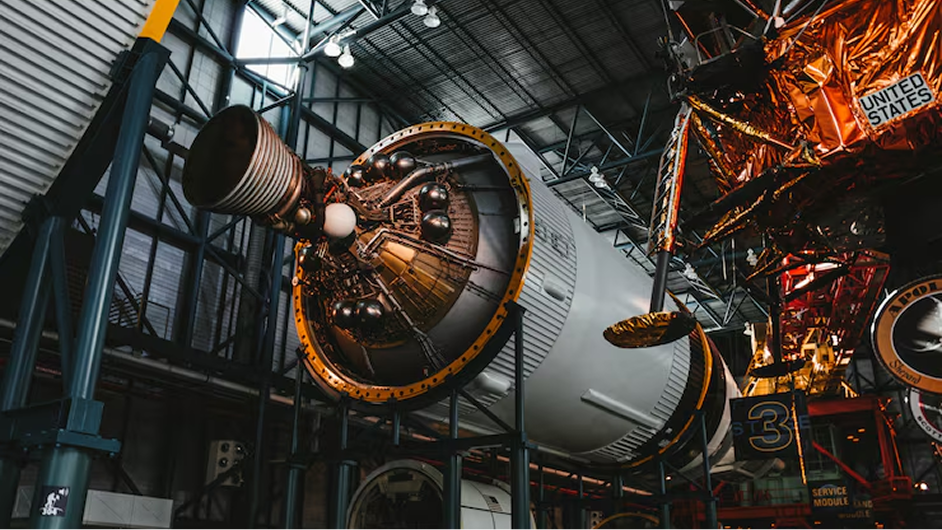
1. Turbine Engines
The most demanding parts of an aircraft are found in the engine.
Turbine Discs: Modern high-pressure turbine (HPT) discs are almost exclusively produced via PM routes. The uniform grain size achieved through sintering and forging ensures that the disc can withstand the immense centrifugal forces of spinning at 15,000+ RPM while being subjected to temperatures of 700°C+.
Combustion Chambers & Fuel Nozzles: These parts often feature complex internal channels for fuel and air mixing. By using PM or Additive Manufacturing (AM), manufacturers can consolidate multiple parts into a single, seamless component, reducing the risk of fuel leaks and improving combustion efficiency.
2. Structural & Airframe Components
Weight is the enemy of aviation. Every kilogram saved translates to thousands of dollars in fuel savings over the life of an aircraft.
Landing Gear Brackets: Traditionally made from massive steel forgings, these are now being replaced by PM titanium alloys. For example, the Airbus A350 XWB uses PM titanium components to shed hundreds of kilograms of weight per airframe.
Bushings & Bearings: In secondary flight controls (like flaps and slats), self-lubricating bearings and bushings produced through powder metallurgy offer a unique "maintenance-free" solution.
By controlling the porosity of the sintered part and vacuum-impregnating it with specialized lubricants, these components provide reliable movement without the need for manual greasing.
3. High-Friction Applications: Brake Pads
Aircraft brakes are subjected to massive kinetic energy during landing, often heating up to 1,000°C in seconds.
Copper & Iron-Based Pads: PM is the standard for aircraft brake linings. These "friction materials" are composed of a metallic matrix (for strength and thermal conductivity) mixed with ceramic friction modifiers and graphite lubricants.
Performance: PM pads offer more stable friction coefficients across wide temperature ranges compared to traditional organic or molded pads.
4. Auxiliary Power Units (APU) and Systems
Beyond the main engines, aircraft rely on a host of smaller mechanical systems.
Gears and Actuators: High-precision gears and sprockets are used in landing gear retraction systems and wing-flap actuators. Producing these through PM allows for high-strength materials like stainless steel to be used without the high cost of gear cutting and grinding.
Filtration: Sintered metal filters are used to purify hydraulic fluids and fuel, ensuring that microscopic debris doesn't cause a catastrophic system failure.
The adoption of these components is driven by a clear set of technical and economic advantages over traditional manufacturing methods.
Benefits of Powder Metallurgy in Component Production
Why do aerospace OEMs (Original Equipment Manufacturers) choose PM over forging or casting?
The answer lies in the unique "three-way balance" of performance, cost, and design freedom.

1. The "Near-Net-Shape" Advantage
In traditional manufacturing, a "buy-to-fly" ratio of 15:1 is common—meaning you buy 15kg of material to get 1kg of final part, with 14kg ending up as scrap chips on the machine shop floor.
One of the primary applications of powder metallurgy in aerospace is to bring this ratio down to nearly 1.1:1. Because the parts are pressed and sintered to their final shape, secondary machining is minimized, saving millions in raw material costs for expensive alloys like titanium.
2. Unparalleled Complexity (PIM and AM)
Powder Injection Molding (PIM) and Additive Manufacturing (AM) have removed the "design for manufacturing" shackles.
Internal Channels: PM allows for the creation of internal cooling passages within turbine blades. These "lattice" structures allow cool air to flow through the blade, creating a "film" of air that protects the metal from melting.
Consolidation: Engineers can now combine 20 separate parts into one. This reduces the number of fasteners and welds, which are often the primary points of fatigue failure in aerospace.
3. Tailored Material Properties
Unlike casting, where you are limited by the chemistry of the melt, PM allows you to "mix and match."
Controlled Porosity: For parts like bearings, porosity is a feature, not a bug.
Sinter-Hardening: Through advanced secondary operations like sinter-hardening or steam treating, manufacturers can increase the surface hardness and corrosion resistance of a part without the need for separate heat-treatment cycles.
Performance Improvements: Fatigue and Temperature
In the aerospace world, "failure" is not an option. Components must undergo millions of cycles of stress without cracking.
1. Fatigue Resistance
One of the historical "myths" about powder metallurgy was that PM parts were brittle due to residual porosity. In 2026, this is no longer the case.
Through the use of Hot Isostatic Pressing (HIP), the internal pores of a sintered part are literally crushed out of existence under high temperature and pressure.
This results in a part with 100% density, often exhibiting fatigue resistance superior to forged alternatives because the grain structure is finer and more isotropic (uniform in all directions).
2. Strength-to-Weight Optimization
The applications of powder metallurgy in aerospace facilitate the use of Aluminum-Lithium (Al-Li) alloys. Lithium is the lightest metallic element.
By adding it to aluminum through PM processes, manufacturers create a material that is 10% lighter and 20% stiffer than standard aerospace aluminum. This is critical for the wings and fuselage panels of long-haul commercial jets.
As we look toward the next decade, the integration of digital technology is making PM even more powerful.
Design Flexibility and the Digital Thread
The future of aerospace manufacturing is digital. In 2026, the applications of powder metallurgy in aerospace are increasingly integrated with "The Digital Thread”, a seamless flow of data from the initial CAD design to the final quality inspection.
Generative Design: AI software can now "grow" a part design based on stress requirements. These designs often look organic or "bone-like" and can only be manufactured using metal powders (AM or PIM).
Automated Quality Assurance: Using X-ray CT scanning, manufacturers can inspect the internal density of every single PM part, ensuring that there are no hidden defects before the part is ever installed on an aircraft.
Cost-Effectiveness and Environmental Impact
Aerospace has a massive carbon footprint, and the industry is under intense pressure to modernize. Powder metallurgy is a key part of the solution.
1. Energy Savings
Melting several tons of steel or titanium in a furnace for casting consumes an enormous amount of energy. Sintering, which occurs below the melting point of the metal, requires significantly less heat.
Furthermore, the high speed of automated PM presses means that thousands of parts can be produced in the time it takes to prepare a single large casting mold.
2. Reducing Material Scarcity Risk
Materials like cobalt, nickel, and titanium are "critical minerals." Every gram of these materials that is turned into waste chips during machining is a loss for both the economy and the environment.
By utilizing near-net-shape manufacturing, PM helps conserve these precious resources.
Conclusion
The evolution of aviation is inextricably linked to the evolution of materials. The applications of powder metallurgy in aerospace have moved from niche components to the very core of aircraft design.
In 2026, the ability to produce high-strength, lightweight, and heat-resistant parts with nearly zero waste is not just an advantage; it is a requirement.
From the self-lubricating bearings and bushings that ensure smooth control surface movement to the high-torque gears in actuation systems, powder metallurgy provides the reliability that the aerospace industry demands.
As we look toward a future of electric flight and hypersonic exploration, the "powder revolution" will continue to be the wind beneath the wings of global innovation.
Looking to integrate precision powdered metal parts into your next high-performance project?
Contact the experts at Sterling Sintered Technologies to explore how our advanced sintering and material solutions can elevate your production standards.
FAQs: Powder Metallurgy in Aerospace
1. Is powder metallurgy safe for critical flight components?
Yes. Modern PM techniques, especially those combined with Hot Isostatic Pressing (HIP), produce parts that are 100% dense and have a more uniform microstructure than cast or forged parts. This makes them highly reliable for critical engine and structural applications.
2. How does PM reduce aircraft fuel consumption?
The applications of powder metallurgy in aerospace allow for the use of lightweight alloys like Titanium Aluminide and Aluminum-Lithium. By reducing the weight of the engine and airframe, the aircraft requires less thrust (and thus less fuel) to maintain flight.
3. What is the difference between Sintering and 3D Printing in aerospace?
Both are forms of powder metallurgy. Traditional "Press and Sinter" is best for high-volume production of smaller parts. Metal 3D Printing (Additive Manufacturing) is a subset of PM used for extremely complex, low-volume, or customized parts that cannot be made with a die.
4. Can PM parts be machined or welded after production?
Yes. Sintered parts can undergo various secondary operations, including CNC machining, grinding, and welding. Many PM parts are designed to be "near-net shape," requiring only minimal "finish machining" on critical tolerances.
5. Why is titanium so common in aerospace PM?
Titanium has an excellent strength-to-weight ratio and is resistant to corrosion. However, it is expensive and hard to machine. Powder metallurgy offers the most cost-effective way to produce titanium parts with minimal waste.